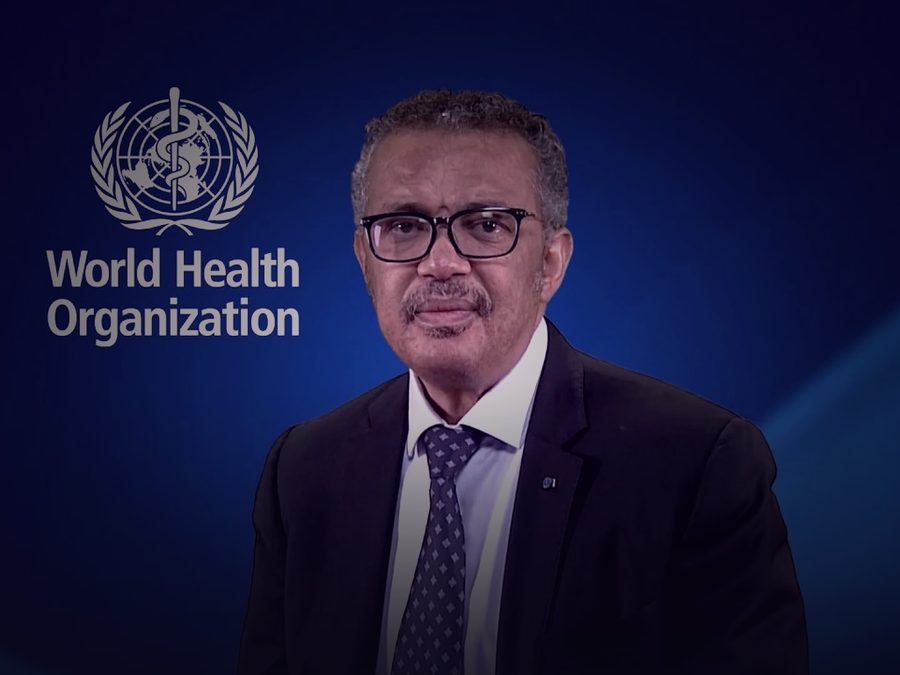
How the World Health Organization maintained 80-90% operational capacity with 50% of its workforce through strategic AI deployment, saving $5.7M-$8.6M annually
When the United States withdrew funding from the World Health Organization in 2024, the organization faced an existential crisis. As WHO's largest contributor, the US had provided 15-20% of the organization's total budget. The loss forced WHO to eliminate approximately half of its 7,400-person workforce—a reduction so severe that under normal circumstances, it would have meant organizational collapse.
But instead of accepting failure, WHO's digital innovation team executed one of the most remarkable AI transformations in organizational history. Within 18 months, they deployed 15 production-grade AI applications that not only maintained operational capacity but fundamentally transformed how a global health organization could function. The result: WHO preserved 80-90% of its operational effectiveness while operating with half the staff, achieving $5.7M-$8.6M in annual cost savings.
This transformation was so successful that the team was personally recommended by the Head of HR to the Director General of WHO as a model for organizational resilience and digital innovation.
The challenge WHO faced wasn't just a budget cut—it was an organizational survival crisis that demanded immediate, radical transformation.
Most organizations facing 50% staff reductions would accept proportional service cuts: reduce geographic coverage, cancel strategic initiatives, experience dramatic quality degradation, and face multi-year recovery timelines.
Instead of accepting paralysis, WHO deployed AI to amplify remaining human capacity:
The Problem: Traditional IT architecture planning required 3-5 senior architects (average $150K-200K/year = $450K-1M annually), with 2-4 weeks per project for requirements gathering. Knowledge was siloed in individual architects' expertise, creating bottlenecks.
The AI Solution: A conversational requirements gathering system that conducts intelligent stakeholder interviews, generates comprehensive documentation (Business Requirements Documents, Solution Descriptions, Architecture Definitions, Implementation Backlogs), and provides real-time Azure cost estimates for dev/test/production environments.
The Impact:
Critical role in staff reduction: With half the IT staff gone, WHO couldn't afford dedicated solution architects. This system enabled program managers and technical leads to self-serve comprehensive architecture planning, maintaining the same project initiation velocity with a fraction of the headcount.
The Problem: WHO HR processes required extensive manual work, with 3-5 days to create each job description manually. HR specialists needed to understand technical requirements across diverse health domains while maintaining compliance with 50+ page WHO job description standards. 8-12 HR staff were previously dedicated to this work.
The AI Solution: GPT-4 powered system that generates WHO-compliant job descriptions from templates, understanding organizational hierarchy and adapting language based on position level (P1-D2), division, department, and subject area. The system produces properly formatted Word documents ready for approval.
The Impact:
Critical role in staff reduction: WHO still needed to recruit for critical positions even as the HR team itself was decimated. This system enabled remaining HR staff to maintain recruitment velocity, processing 10x more positions per person—critical for backfilling essential roles during the transition.
The Problem: The UN Joint Staff Pension Fund has extraordinarily complex rules across 600+ pages of regulations. Staff facing potential termination needed answers to questions like "When can I retire with full benefits?" and "What happens to my pension if I transfer to another UN agency?" Previously, 6-8 HR benefits specialists fielded 100+ pension inquiries daily with 2-5 day wait times and a 15-20% error rate requiring recalculation.
The AI Solution: Conversational AI using LangGraph workflow architecture for complex multi-step reasoning, with a dynamic calculation engine that converts JSON formulas into executable Python code for real mathematical computations. The system performs semantic search across the entire pension knowledge base and provides source citations for every answer.
The Impact:
Critical role in staff reduction: The funding cuts eliminated most of WHO's HR benefits team just as remaining staff became anxious about pension implications of potential termination. This system provided critical employee support during the most stressful period in WHO's history.
The Problem: WHO processes thousands of documents requiring data extraction—grant applications (50-100 pages), country health reports, research submissions, and compliance documents. Previously, 10-15 data entry clerks spent 3-5 days per document with a 15-25% error rate requiring QA review.
The AI Solution: GPT-4 powered pattern recognition that learns extraction patterns from examples, with dynamic schema generation, batch processing capabilities, Pydantic validation, and confidence scoring (0.0-1.0) for each extraction.
The Impact:
Critical role in staff reduction: With half the administrative staff gone, WHO faced massive document processing backlogs. This system enabled the remaining skeleton crew to maintain processing velocity, ensuring critical funding applications and regulatory compliance didn't collapse.
The Problem: During the workforce reduction crisis, organizational structure changed weekly as positions were eliminated. Previous manual processes required 2-3 HR staff spending 1-2 weeks to update org charts in PowerPoint/Visio, with static documents becoming outdated immediately.
The AI Solution: Intelligent data processing that interprets CSV/Excel employee data and automatically detects hierarchy, generating beautiful D3.js interactive visualizations with Microsoft Entra ID integration and real-time updates.
The Impact:
Critical role in staff reduction: The organizational chaos of eliminating 50% of staff could have paralyzed operations. This system enabled leadership to communicate new structures instantly after each restructuring decision, preventing communication lags that destroy morale and productivity during major reorganizations.
The Problem: WHO's salary step determination is complex, with 6-8 HR specialists previously spending 2-4 hours per candidate to review CVs, calculate relevant experience, and determine appropriate steps. Inconsistent decisions across HR specialists caused candidate frustration, with 3-5 day turnaround times delaying offer letters.
The AI Solution: Dual PDF processing with specialized extraction for WHO's Personal History Form, GPT-4 position matching, experience calculation, qualification scoring (0-100% with detailed reasoning), and professional Excel report generation with WHO branding.
The Impact:
Critical role in staff reduction: The funding cuts created a massive hiring surge to replace the "wrong" people who left vs. who they wanted to keep. The decimated HR team faced an impossible backlog. This system enabled 2-3 remaining HR specialists to handle workload that previously required 8-10 people.
The Problem: WHO processes thousands of monthly payments to staff, consultants, and vendors. Manual reconciliation required 6-10 finance clerks spending 30-45 minutes per payment with an 8-12% error rate. Month-end close required 3-4 days of overtime.
The AI Solution: Regex pattern matching for reference extraction, amount detection using currency patterns, automatic matching of PDF documents to Excel records, variance analysis with threshold flagging, and Azure Cosmos DB storage for audit trails.
The Impact:
Critical role in staff reduction: The finance department lost 40-50% of accounting staff, threatening month-end close processes. This system enabled the skeleton finance team to maintain compliance and audit readiness, preventing financial control breakdowns.
KEYWORD-HIGHLIGHT (Web Compliance Monitoring): Provides 100% web content coverage vs. 15-20% sampling with manual review, saving $150K-250K annually. Dual-mode (regex + AI) entity extraction ensures compliance across 6,000+ WHO web pages.
DETECT-AI (Content Quality Assurance): Document screening in 1-2 seconds vs. 10-15 minutes of human review (90%+ time savings). Processes 500+ document scans weekly with 85-92% accuracy in distinguishing AI vs. human content, maintaining WHO's reputation for authoritative guidance.
POLICY-EDITOR (Development phase): Projected to reduce document revision from 2-4 weeks to 2-3 days (85%+ reduction) with $400K-600K annual savings, enabling remaining policy officers to maintain WHO's vast policy library.
CHIEF SCIENTIFIC OFFICE (Document Evaluator - Testing phase): Reduces normative product evaluation from 3-5 days to 4-6 hours (85%+ reduction), enabling remaining evaluators to maintain quality standards while processing backlogs.
Total Direct Savings: $5.7M - $8.6M Annually
The 15 AI systems collectively eliminated the need for 60-90 full-time positions while dramatically improving quality, speed, and consistency. But the financial impact tells only part of the story.
WHO maintained 80-90% operational capacity with 50% of the workforce.
This wasn't just efficiency gains—it was organizational survival through technology-driven transformation. While most organizations would have accepted proportional service cuts, WHO demonstrated that AI could serve as a force multiplier that preserves institutional knowledge, maintains service delivery, and enables a leaner organization to achieve what previously required twice the staff.
The existential threat eliminated political resistance to AI adoption. Leadership understood: innovate or perish. Bureaucracy collapsed under urgency, and "no" was not an option.
Using a single AI platform (Azure OpenAI) across all systems enabled centralized expertise, shared learnings, and faster development. Enterprise security and compliance were built-in, and WHO already had an existing Microsoft partnership.
The team adopted a build-test-deploy cycle measured in weeks, not years. "Good enough now" beat "perfect later." Iterative improvement based on real user feedback created a fail-fast, learn-fast, pivot-fast environment.
Systems were designed by WHO staff for WHO staff, ensuring immediate understanding of real pain points. There were no enterprise software consultant intermediaries—just direct feedback loops from users to developers.
Modern cloud-native architecture (microservices, containers, serverless), Infrastructure as Code (Terraform) for rapid deployment, comprehensive monitoring and observability, and security and compliance as foundational requirements.
HR Specialist testimony: "When we lost 60% of our HR team, I thought we'd be drowning in work forever. The job description generator meant I could still support managers who needed to hire, even though I was now covering three people's jobs. It's not perfect, but it's better than telling managers 'sorry, we can't help you hire for 6 months.'"
Finance Officer testimony: "Month-end close was a nightmare after the cuts. We went from 8 people to 3, but still had to reconcile thousands of payments. The reconciliation system saved us. What used to take us 4 days of overtime now takes 5-6 hours. Without it, we would have failed audits and lost more donor confidence."
Pension Administrator testimony: "Staff were terrified about their pensions during the cuts. We had 100+ pension questions daily and 2 people to answer them. The chatbot handled 85% of questions automatically. I focused on the really complex cases. Staff got answers immediately instead of waiting a week for me to get to their email. It reduced panic during the worst time in WHO's history."
✅ Facing workforce reductions (voluntary or involuntary)
✅ Experiencing budget constraints with constant service demands
✅ Drowning in administrative overhead consuming strategic capacity
✅ Operating in high-complexity environments (regulations, compliance, multinational)
✅ Have repetitive cognitive work currently requiring expensive human capital
Phase 1: Crisis Assessment & Quick Wins (Months 1-2)
Phase 2: Core Operations Transformation (Months 2-3)
Phase 3: Enterprise Scaling (Months 3-8)
This transformation was so successful and impactful that the team was personally recommended by the Head of HR to the Director General of WHO as a model for organizational resilience and digital innovation. This recognition from the highest levels of WHO leadership validates not just the technical achievement, but the strategic vision and execution that enabled organizational survival.
WHO is building the future of organizational operations in real-time, under crisis conditions. The organization is evolving toward:
The WHO Digital Innovation Portfolio is not a technology success story—it's an organizational survival story. When faced with the catastrophic necessity of eliminating half its workforce, WHO stood at a crossroads and chose the path of AI transformation.
The results speak for themselves:
| Metric | Before Cuts | After AI Transformation | Change |
|---|---|---|---|
| Workforce | 7,400 staff | 3,500 staff | -53% |
| Operational Capacity | 100% | 80-90% | -10-20% |
| Cost per Transaction | Baseline | 40-60% lower | -40-60% |
| Processing Speed | Baseline | 5-20x faster | +400-1900% |
| Error Rates | 15-25% | 3-8% | -60-85% |
| Staff Productivity | 1x | 2-3x | +100-200% |
WHO maintained nearly full operational capacity while eliminating half its workforce and dramatically improving speed and quality. This provides a survival playbook for international organizations, proves that any organization can achieve AI transformation if WHO can do it during a crisis, and demonstrates that AI's role is amplifying human capacity under extreme constraints, not replacing humans.
The WHO Digital Innovation Portfolio will be studied for decades as a case study in crisis-driven digital transformation. It proves that organizational change that would take 10 years in peacetime can happen in 18 months under existential threat, that AI enables previously impossible efficiency gains, that human-AI collaboration creates superhuman capacity, that technology creates organizational resilience to external shocks, and that the "AI-native organization" is not science fiction—WHO is building it right now.
This is the story of how AI saved the World Health Organization.
For organizations facing similar challenges, WHO's transformation demonstrates that artificial intelligence, strategically deployed under crisis conditions, can save organizations from collapse and transform them into more capable, more efficient, more resilient institutions than they were before the crisis began.